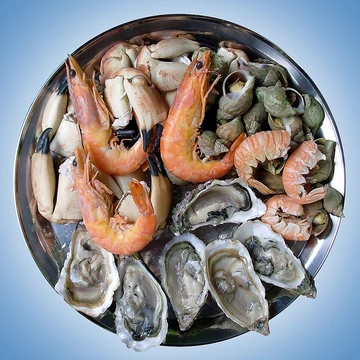
Crab
Polyphyletic decapods that evolved crab-like form multiple times.
Crabs are decapod crustaceans, including both true crabs (Brachyura) and various groups within the Anomura such as hermit crabs, king crabs, and porcelain crabs. They are characterized by a heavily armoured shell, concealed tail segments, sideways running, and a habit of hiding in rocky crevices. Crabs are not a single natural group but are polyphyletic, having convergently evolved multiple times through the process of carcinisation.
- size_range
- From a few millimeters (pea crab) to a leg span of 4 m (Japanese spider crab)
- largest_terrestrial_arthropod
- Coconut crab, up to 40 cm long and 4.1 kg
- marine_crustacean_fishery_share
- About 20% of marine crustaceans caught or farmed
- annual_global_catch
- 1.5 million tonnes
- number_of_true_crab_species
- Around 7,000
- freshwater_adapted_species
- About 1,300 species in 8 families
Lore & Background
Crabs vary greatly in size, from the tiny pea crab to the Japanese spider crab with a leg span of up to 4 meters. The coconut crab is the largest terrestrial arthropod, reaching 40 cm in length and weighing up to 4.1 kg. Many crabs are free-living marine omnivores, but others are specialist herbivores, carnivores, or parasites. Some species, like the tufted ghost crab, are semi-terrestrial, while others, such as the tree crab, are terrestrial as adults, returning to the ocean only to spawn. Around 1,300 species are adapted to freshwater habitats.
Reader's Guide
Crabs are significant both ecologically and economically. They make up about 20% of marine crustaceans caught or farmed for human consumption, with an annual global catch of 1.5 million tonnes. Commercially important species include the Asian blue crab, brown crab, blue crab, Dungeness crab, and snow crab. In British cuisine, dressed crab is a traditional dish; in Goa and Mozambique, crab curry is typical. Crabs also appear in culture, including the constellation and astrological sign Cancer, Greek mythology (the crab Karkinos), and art from ancient Moche pottery to Albrecht Dürer's painting. The process of carcinisation—convergent evolution toward a crab-like body plan—has occurred multiple times among decapods, making crabs a polyphyletic group. This evolutionary trend is inaccurately referenced in a popular meme that jokes everything will evolve into crabs.
Did You Know?
- Crabs are polyphyletic, having evolved the crab body form multiple times through carcinisation.
- The Japanese spider crab has a leg span up to 4 m (13 ft).
- The coconut crab is the largest terrestrial arthropod, weighing up to 4.1 kg.
- Crabs make up about 20% of marine crustaceans caught or farmed for human consumption.
Frequently Asked Questions
What is crab and what makes it a distinct ingredient in the kitchen?
Crabs are decapod crustaceans recognized by their heavily armoured shells, tucked-under tail segments, and characteristic sideways gait. They span a remarkable size range, from pea crabs only a few millimeters wide to the Japanese spider crab whose leg span can reach 4 meters.
How many crab species are actually available for cooking?
There are roughly 7,000 true crab species in the order Brachyura, alongside additional edible groups like hermit crabs, king crabs, and porcelain crabs within Anomura. On top of that, about 1,300 species across 8 families have adapted to freshwater, widening the pool of cookable options well beyond the ocean.
How much crab is harvested worldwide each year?
The annual global catch sits at approximately 1.5 million tonnes. Crabs make up roughly 20% of all marine crustaceans that are either wild-caught or farmed, making them a major pillar of the seafood industry.
What is the largest crab you can realistically prepare as a dish?
The coconut crab is the biggest land-dwelling arthropod, reaching up to 40 cm in body length and weighing around 4.1 kg. In the water, the Japanese spider crab dwarfs everything else with a leg span of up to 4 meters, though most of that measurement is leg rather than usable meat.
Are all crabs actually closely related to each other?
No—crabs are polyphyletic, meaning the familiar crab-like body plan evolved independently on multiple occasions through a process called carcinisation. A hermit crab and a blue crab may look like distant cousins, but they share far less direct ancestry than their similar silhouettes would imply.
Spotted an error? Know more?
This is a living reference — every entry is fact-audited, and reader corrections feed straight into our audit queue. Suggest an edit · See this site's audit record