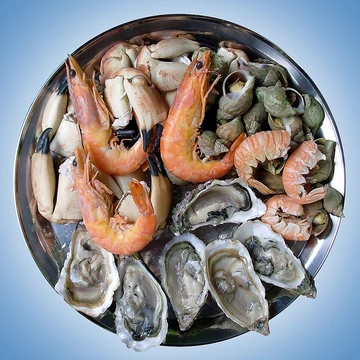
Oyster
Salt-water bivalve molluscs valued for food, pearls, and ecology.
Oyster is the common name for a number of different families of salt-water bivalve molluscs that live in marine or brackish habitats. Some species are commonly consumed and regarded as a delicacy, while others are harvested for pearls or their shells. Oysters are filter feeders that improve water quality and provide habitat for many marine species, making them ecologically and economically important.
- field
- Marine biology, aquaculture
- known_for
- Filter feeding, pearl production, culinary delicacy, keystone species in coastal ecosystems
Lore & Background
Oysters are filter feeders, drawing water in over their gills through the beating of cilia. Suspended plankton and non-food particles are trapped in mucus and transported to the mouth. Under ideal conditions, an oyster can filter up to 190 liters of water per day. They breathe primarily via gills but also exchange gases across their mantles. Their nervous system includes two pairs of nerve cords and three pairs of ganglia, with no evidence of a brain.
Oysters usually reach maturity in one year and are protandric: they spawn first as males, then as females as they grow. A single female can produce up to 100 million eggs annually. Fertilized eggs develop into larvae that settle on suitable surfaces, such as another oyster's shell. Attached larvae are called spat. Some tropical oysters, like the mangrove oyster, grow best on mangrove roots.
A group of oysters is called a bed or oyster reef. Oysters are widely distributed in coastal waters worldwide. Their hard shells and the nooks between them provide habitat for hundreds of animals, including sea anemones, barnacles, and hooked mussels. Oyster reefs can increase the surface area of a flat bottom tenfold.
Reader's Guide
Oysters hold significant ecological and economic importance. As efficient filter feeders, they improve water quality by consuming plankton and suspended particles. Historically, the Chesapeake Bay's oyster population filtered the estuary's entire water volume every three to four days, though by 2008 a complete cycle was estimated to take nearly a year. Oyster reefs offer habitats for fish and invertebrates and protect shorelines from erosion. Oyster farming has a long history and remains a major aquaculture industry globally, providing protein, zinc, and other nutrients. Modern cultivation methods include bottom culture, suspended culture, and hatchery production. Sustainable oyster aquaculture is considered environmentally friendly with low resource inputs and can act as a marine carbon dioxide removal hotspot. However, the sector faces challenges such as diseases, habitat degradation, and climate change impacts including ocean acidification and rising water temperatures. The largest oyster-producing body of water in the United States is the Chesapeake Bay, though its beds have decreased due to overfishing and pollution.
Did You Know?
- The word 'oyster' comes from Old French 'oistre' and first appeared in English during the 14th century.
- Pearl oysters are not closely related to true oysters; they belong to the family Pteriidae.
- Oysters have no brain; their nervous system includes two pairs of nerve cords and three pairs of ganglia.
- A single female oyster can produce up to 100 million eggs annually.
Frequently Asked Questions
What gives oysters their distinct regional flavors?
The taste of an oyster is shaped by the specific minerals, salinity, and plankton present in the water where it was farmed or wild-caught. This 'terroir' effect means oysters from the Pacific Northwest taste noticeably different from those harvested in the Gulf of Mexico or the English Channel.
How can I tell if a raw oyster is fresh and safe to eat?
A live oyster should have a tightly closed shell or snap back quickly when poked, and it should smell briny and clean rather than foul. If the shell is gaping open and doesn't respond to pressure, or the meat smells strongly of ammonia, discard it.
Why are oysters considered a culinary delicacy rather than just another shellfish?
Oysters offer a uniquely briny, slightly sweet, and mineral-rich flavor that shifts with the season and location, giving them a complexity few other raw foods match. Their delicate texture and the ritual of shucking them at the table have made them a centerpiece of both fine dining and casual seafood counters.
What's the difference between eating oysters raw versus cooked?
Raw oysters highlight their natural brininess and silky texture, often served with mignonette, lemon, or a splash of champagne to accentuate the flavor. Cooking methods like grilling, baking with cream, or deep-frying transform the meat into a firmer, sweeter bite that pairs well with richer sauces.
Beyond the kitchen, why do oysters matter to coastal ecosystems?
As filter feeders, a single oyster can process up to 50 gallons of water per day, removing excess nutrients and clarifying the surrounding water. Their reefs also create three-dimensional habitat that shelters crabs, fish, and other invertebrates, making oysters a keystone species in many estuaries.
Spotted an error? Know more?
This is a living reference — every entry is fact-audited, and reader corrections feed straight into our audit queue. Suggest an edit · See this site's audit record