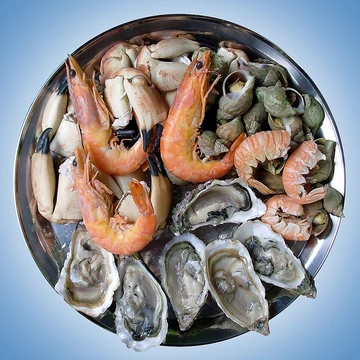
Mussel
Bivalve molluscs with elongated shells, found in salt and fresh water.
Mussel is the common name for several families of bivalve molluscs found in both saltwater and freshwater habitats. These organisms are characterized by an elongated, asymmetrical shell, and many species are filter feeders that play important roles in aquatic ecosystems. Marine mussels, particularly those in the family Mytilidae, are notable for attaching to hard substrates using strong byssal threads, while freshwater mussels include the pearl-producing Unionida and the invasive Dreissenidae.
- field
- Marine and freshwater bivalve molluscs
- known_for
- Filter feeding, byssal thread attachment, and pearl production
- habitat
- Intertidal zones, hydrothermal vents, lakes, rivers, and streams worldwide except polar regions
- diet
- Plankton and microscopic sea creatures
- reproduction
- Gonochoristic; marine species have external fertilization, freshwater species have parasitic glochidia larvae
Lore & Background
Marine mussels, especially those in the family Mytilidae, live on exposed shores in the intertidal zone, attached by byssal threads. Some species, like those in the genus Bathymodiolus, have colonized hydrothermal vents on deep ocean ridges. Their shells are typically longer than wide, wedge-shaped, and dark blue, blackish, or brown externally, with a silvery, nacreous interior. Freshwater mussels, including the Unionida, inhabit lakes, ponds, rivers, and canals, and are classified in a different subclass despite superficial similarities. Zebra mussels and their relatives in the Dreissenidae family are not related to other mussels but resemble them in shape and attachment method.
Mussels are filter feeders, drawing water through an incurrent siphon and using cilia on the gills for ciliary-mucus feeding. Marine mussels often clump together on wave-washed rocks, which helps them withstand wave force and reduce water loss at low tide. Reproduction in marine mussels involves external fertilization and a drifting larval stage lasting weeks to months. Freshwater mussels release sperm into the water, and after fertilization, eggs develop into glochidia larvae that parasitize fish, attaching to fins or gills. The glochidia are species-specific and form cysts on the fish host before dropping off to begin independent life.
Reader's Guide
Mussels are ecologically and economically significant as filter feeders that help maintain water quality and as a food source for humans and wildlife. Marine mussels are preyed upon by starfish, seabirds, and predatory gastropods like dog whelks, while freshwater mussels are eaten by muskrats, otters, raccoons, ducks, baboons, and geese. The byssal threads of marine mussels serve both as anchors and as defensive tethers against predators. In aquaculture, mussels are cultivated for food and pearls; China accounted for 40% of the global catch in 2005, and Spain led European production. In North America, mussel farming began in the 1970s, with Prince Edward Island producing 80% of cultured mussels. The New Zealand green-lipped mussel industry exceeded 140,000 metric tons annually in 2009. Freshwater mussels are used for pearl cultivation, and some marine species like the blue mussel are grown for food. The mussel's shell, composed of three layers including nacre, provides protection and support, while the foot varies in form between marine and freshwater species, adapted for burrowing or byssal attachment.
Did You Know?
- Marine mussels attach to substrates using byssal threads, which are also used to tether predatory dog whelks, starving them to death.
- Freshwater mussel larvae, called glochidia, parasitize fish by attaching to their fins or gills, and are species-specific to their fish host.
- The South African white mussel does not bind to rocks but burrows into sandy beaches, extending two tubes above the sand for feeding and waste.
- In 2005, China accounted for 40% of the global mussel catch according to a FAO study.
Frequently Asked Questions
Who is Mussel?
Mussel is the common name for a group of bivalve molluscs with elongated, asymmetrical shells that inhabit both saltwater and freshwater environments worldwide. They belong to several families, with Mytilidae dominating marine settings and Unionida and Dreissenidae representing key freshwater lineages.
What are Mussel's powers/role?
Mussels are prolific filter feeders, constantly sifting plankton and microscopic organisms from surrounding water to sustain themselves. Marine species anchor themselves to rocks and pilings using remarkably strong byssal threads, while certain freshwater relatives are celebrated for producing pearls.
Where does Mussel live?
You can encounter mussels in intertidal zones, hydrothermal vents, lakes, rivers, and streams across nearly every region on Earth except polar areas. They attach to hard substrates in the ocean or settle into sediment in freshwater systems.
How does Mussel reproduce?
Mussels are gonochoristic, so each individual is either male or female. Marine species release gametes into the water for external fertilization, whereas freshwater mussels produce parasitic glochidia larvae that must latch onto a fish host to finish developing.
Why is Mussel important?
As constant filter feeders, mussels clarify water and underpin aquatic food webs across diverse ecosystems. Their byssal-thread chemistry is studied for bioengineering applications, and freshwater pearl mussels contribute to both biodiversity and cultural heritage.
Spotted an error? Know more?
This is a living reference — every entry is fact-audited, and reader corrections feed straight into our audit queue. Suggest an edit · See this site's audit record